August 6, 2026 · 4 min read
Green Streaks, Black Stains, or Chalky White Patches? Here's What's Growing on Your House
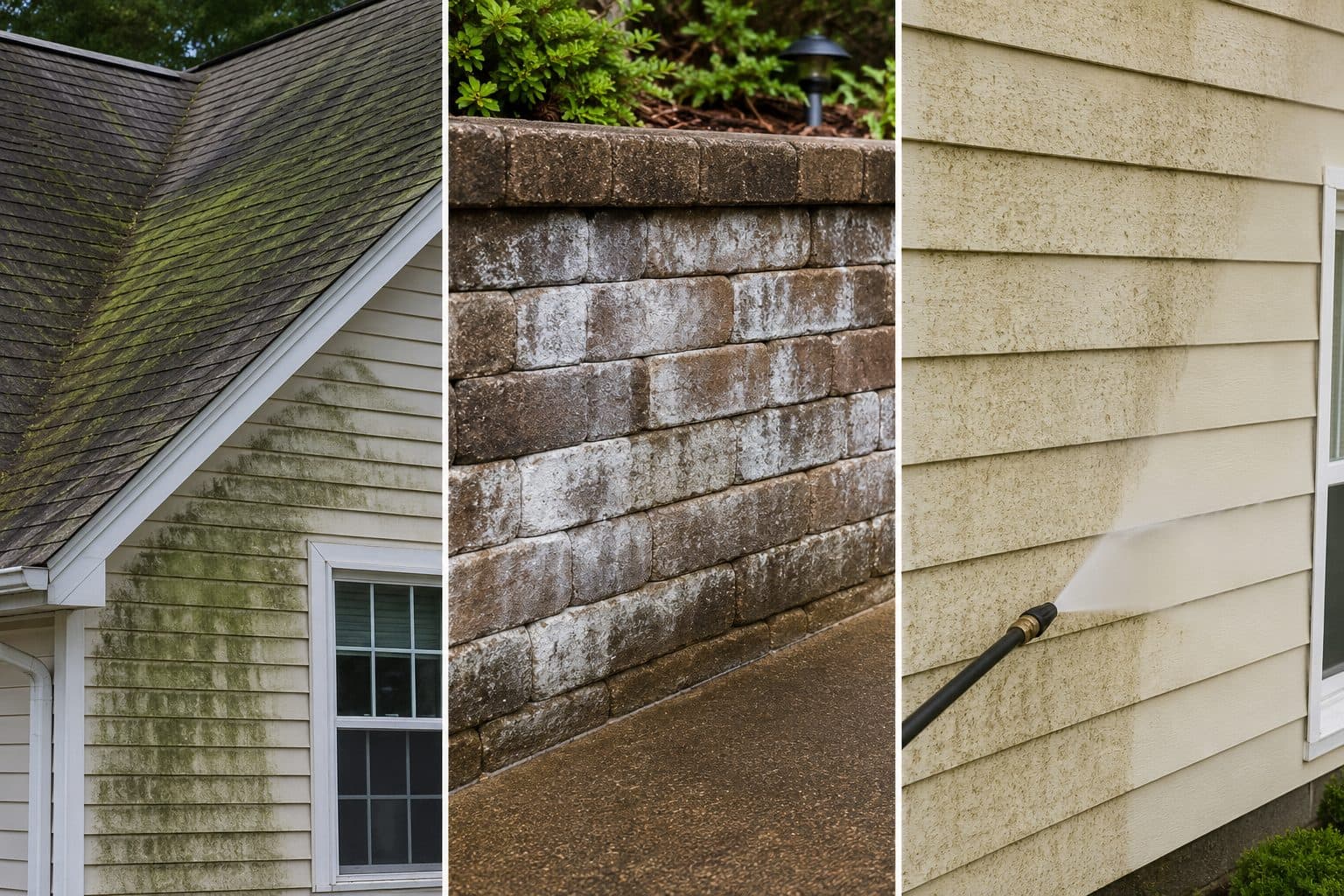
Homeowners in Columbus and Phenix City call us all the time describing the same thing: "There's this stuff growing on my house and I don't know what it is." That's a fair question, because what looks like simple dirt can actually be three or four different problems layered on top of each other. Knowing the difference matters, because bleach kills algae but does nothing for efflorescence, and scrubbing efflorescence the wrong way can actually make it worse.
Green and Black Streaks: Algae and Mold
The green film you see on north-facing roofs, fences, and siding around here is almost always algae, usually a species called Gloeocapsa magna. It thrives in our humidity and shows up heaviest in shaded spots that don't get much direct sun, like under tree cover or on the side of a house facing away from the afternoon light. It spreads by airborne spores, which is why it often jumps from one roof to a neighbor's within a season or two.
Black streaks on asphalt shingles are a slightly different story. That's typically algae that's died and left behind dark, tar-like residue, often mixed with accumulated dirt and organic debris. On siding, dark spots in corners, under eaves, or around downspouts are more likely true mold or mildew, which needs consistent moisture to establish itself. Georgia and Alabama's long, humid summers and mild, wet winters give both algae and mold exactly the conditions they want: warmth, moisture, and shade.
White, Chalky Buildup: Efflorescence
If you've got a brick chimney, a block retaining wall, or a concrete driveway with a white, powdery haze that looks almost like dried salt, that's efflorescence. It's not biological growth at all. It's mineral salt deposits left behind when water moves through masonry or concrete and evaporates at the surface, pulling calcium and other minerals with it. This is extremely common on Columbus-area homes with brick veneer or block foundations, especially after a wet stretch followed by hot, dry days that speed up evaporation.
Efflorescence usually means water is finding its way into the masonry from somewhere, whether that's grading issues, a cracked mortar joint, or poor drainage around a foundation. Pressure washing can remove the surface deposit, but if the underlying moisture source isn't addressed, it will come back. Vinegar-based cleaners and plain water often reduce it temporarily; stubborn cases need a mild acidic cleaner formulated for masonry, applied carefully so it doesn't damage the mortar.
Plain Dirt and Pollen Grime
Then there's the stuff that's just dirt: road film on a stucco exterior, pollen coating a driveway every March and April, or general grime that builds up on vinyl siding facing a busy street. This category is the easiest to deal with because it doesn't require any biocide or chemical treatment, just water pressure and time. But it's also the category people most often mistake for something worse, especially during Georgia's heavy spring pollen season when a yellow-green film covers everything and looks alarmingly like algae.
A Quick Way to Tell Them Apart
- Location: Algae and mold favor shaded, damp areas; efflorescence shows up on masonry and concrete regardless of shade; dirt and pollen coat everything more evenly.
- Texture: Algae feels slightly slimy or fuzzy when damp; efflorescence is dry, powdery, and can be brushed off; dirt just wipes away without much residue.
- Color pattern: Algae tends to streak downward from a water source like a roofline or gutter seam; efflorescence spreads in blotchy patches following the masonry joints; dirt is usually uniform.
- Reaction to water: Wetting algae often deepens its green color; efflorescence sometimes seems to disappear when wet and reappear once dry, because the salts dissolve and redeposit.
- Where it recurs: If a spot keeps coming back in the same place after cleaning, that's a sign of an ongoing moisture source, not a one-time cleaning issue.
Why This Matters Before You Grab a Cleaner
Using the wrong approach doesn't just waste a Saturday. Bleach-heavy mixtures on brick can accelerate efflorescence by adding more moisture and salts into the mix. High pressure aimed at soft, algae-covered vinyl siding can drive water behind panels instead of removing growth from the surface. And scrubbing efflorescence with a stiff brush and no cleaner just polishes the salt crystals into the pores of the concrete instead of lifting them out.
A soft wash approach, using the right cleaning solution at low pressure, is usually the better call for siding, roofs, and anything with algae or mold. Masonry and concrete with efflorescence or heavy dirt buildup can typically handle higher pressure paired with a cleaner matched to what's actually on the surface. Figuring out which situation you're dealing with before you start is half the job.
If you're staring at your siding, roof, or driveway trying to decide what you're actually looking at, we're happy to take a look and tell you straight. Columbus Pressure Washing Pros offers free, no-obligation quotes for homes and businesses throughout Columbus, GA and Phenix City, AL, with flexible scheduling six days a week, so you can get an honest answer without any pressure to book on the spot.
Ready for a cleaner property?
Get a free, no-obligation quote in minutes. We usually reply the same day.